



2
From the ES's Office
Executive Secretary's desk
 
March 2010 Newsletter
IUCEA Strategic Plan


Structure and Organization

The IUCEA structure is made up of the Council, a Governing Board (comprising university, government and private sector representatives), an Executive Committee, a Secretariat, and Specialised Committees and Standing Committees for specific purposes. The Board Chairman (elected from one of the Vice-Chancellors in the region) holds office for a period of two years. The Secretariat, based in Kampala Uganda, is headed by the Executive Secretary.


The IUCEA Council

The IUCEA Council consists of a Chairman and Vice-Chancellors and principals of all member universities and member university colleges, plus representatives of member states and the private sector. It holds at least one meeting each year, plus any other special meetings at such times as may be necessary, in every case in accordance with the regulations guiding the operations of IUCEA. All members of the Governing Board are members of the Council.


Functions

The Council is charged with the following functions:

Determining the general policy of the IUCEA;

Approving or amending the general framework for the working programmes of the IUCEA;

Laying down the principles on which subscriptions shall be fixed and periodically revising them;

Undertaking, or directing the Governing Board to undertake, any other tasks as are compatible with the aims and objectives of the IUCEA;

Electing the Chairman of the Council and members of the Governing Board;

Receiving annual progress reports of IUCEA activities;

Giving professional guidance to the Governing Board.


The Governing Board


The Governing Board is responsible to the IUCEA Council to which it reports concerning all its activities. There are at least two meetings of the Governing Board each year. The Governing Board owns and has power to receive grants, donations and to manage all the property and income of the Council. The income and property of the Council is used solely for the promotion of the objectives of the Council.

The IUCEA Governing Board consists of the following 27 members, elected by the General Assembly:

Three Vice-Chancellors from each country, elected by the Vice-chancellors of that country, one of whom is from a private university;

One Senate representative from each country;

The Chief Executive of the Commission for Higher Education (or equivalent body) from each country;

The General Secretary of the East African Community;

The Permanent Secretary of the Ministry responsible for higher education in each country;

One representative from each country to represent the private sector representing commerce and industry;

Two eminent international persons i.e. an individual of repute and extensive experience in management of research in higher education, and an individual with experience in mobilising funds for the development of higher education, research and technology;

The Director (or equivalent) of the National Science and Technology Organisation in each country.

The current Chairman of the IUCEA Governing Board is Prof Tolly A S Mbwette, Vice-Chancellor, the Open University of Tanzania.

Functions


The Governing Board is the implementing organ for the decisions of the Council. Its major functions include:
Electing the Vice-Chairmen and other members who, together with the Chairman, constitute the

Executive Committee of the Governing Board, and acts on its behalf;

Preparing the agenda of the Council;

Directing and controlling the activities of the IUCEA Secretariat;

Appointing the Executive Secretary and other Senior Staff of the IUCEA Secretariat;

On behalf of the IUCEA Council, approving or amending the Council's annual working programme and  annual budget presented by the Executive Secretary;

Considering all other matters referred to it by the Executive Committee.

The Executive Committee

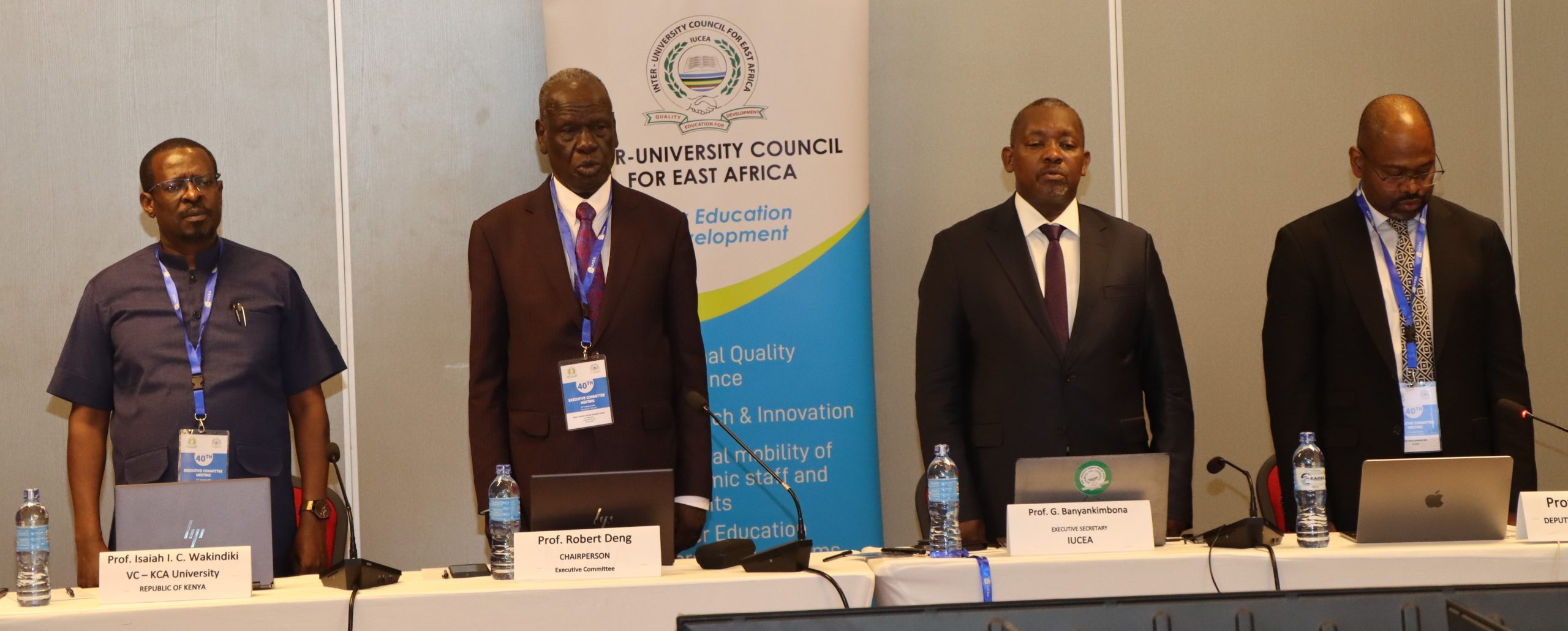
This is a specialised committee of the IUCEA Governing Board. The Governing Board may delegate all or any of its powers to this committee, or any other sub-committees it may from time to time appoint, with such membership and terms of reference as it may deem appropriate.

Functions

The Executive Committee is competent to deal with all matters normally within the competence of the Governing Board, but it is not empowered to approve the budget of the Council;


All issues deliberated upon by the Executive Committee must be reported to the Governing Board for ratification during the latter's subsequent meeting.


The Secretariat


The Secretariat is the permanent executive organ of the IUCEA and operates under the supervision of theGoverning Board and under the direction of the Executive Committee. Its day-to-day execution of activities is under the direction of the Executive secretary. The secretariat is made up of staff from all the three member states with the senior staff positions distributed equally among the three East African countries of Kenya, Tanzania and Uganda.

Functions


The IUCEA Secretariat is charged with, among others, the following functions:

Ensuring the development of a comprehensive electronic network linking member institutions with each other and the Internet. This would be used to support and promote new methods of teaching and learning, information dissemination by IUCEA and between members and research partners;

Promoting collaborative research and development programmes;

Helping to develop criteria for assessing standards and assuring the quality of teaching and research in the East African region;

Facilitating the development of regional policies for the exchange of academic staff and students (at both undergraduate and postgraduate levels), wherever possible without the transfer of funds, and monitoring their effectiveness;

Identifying training needs and then organising the relevant provisions in academic staff development in curriculum reform and teaching methods and management development for senior university administrators.


Other Committees

The Governing Board may establish specialised and other committees, the members of which may hold office at the pleasure of the Governing Board. These committees may exercise such powers and functions as the Governing Board may determine. The committees are empowered to set up sub-committees to assist them in doing their work. Every specialised committee is expected to hold a formal meeting at least once a year.


Specialised Committees

Currently ten (10) Specialised Committees operate under the auspices of the IUCEA. They include:

Committee for Adult, Distance and Continuing Education

Committee for Agriculture, Water, Fisheries and Forestry Education

Committee for Humanities, Arts and Social Sciences Education

Committee for Education (Elementary, Secondary and Tertiary)

Committee for Engineering Education

Committee for Legal Education

Committee for Medical Education

Committee for Science Education

Committee for Veterinary Education

Committee for Information and Communications Technology Education


Functions


These committees, consisting of experts from the universities, governments and certain professional bodies, are concerned with the teaching, training and advancement of their respective disciplines at the secondary and tertiary levels throughout East Africa. They are the professional organs of the Council and are responsible for facilitating regular consultations and for rendering advice to the member universities and governments on any aspect of their respective professions. They are also responsible for publishing relevant journals.


Others

The Governing Board or the Council may, from time to time, appoint any other Committees as they deem necessary in order to carry any other functions.

6. Programmes and SchemesThe IUCEA administers a number of programmes and schemes. Every request for sponsorship under these programmes must be sent to the Executive Secretary through the relevant Vice-Chancellor.


Exchange of staff and examiners

Under this programme, arrangements are made for the university lecturers working in East Africa to pay academic visits, normally lasting not more than one semester, to the various departments of member universities. These visits are intended to meet real needs that must be carefully identified by the universities concerned. The Council is responsible for the visiting lecturer's hotel and out-of-pocket expenses while his/her own university continues to pay his/her salary. While on the programme, the visiting academic teaches students, participates in research and exchanges ideas on topics of mutual interest.

Every participant in the programme is required to submit to the IUCEA Secretariat a report on his/her experiences.

Also under this programme the universities are able to share the services of external examiners from within East Africa. This plan facilitates comparability of academic standards of the final awards of the member universities and encourages utilisation of the East African academic talent. External examiners are offered honoraria for their services.


Exchange of students

Under this programme, an agreed number of students from a partner state are able to study at a university in another East African state essentially on a one-to-one basis in order to avoid the problem of lack of foreign exchange. This scheme, which was originally designed to facilitate equitable sharing of limited and uncommon university facilities, now provides the best method of maintaining the East African character of the universities - a feature which is considered important for academic as well as political reasons.


Joint research and publications

The Council attaches special importance to research and the publication of research findings as well as the production of teaching materials in general by the academics in East Africa. This programme is intended to make it possible for university lecturers from more than one partner state to carry out joint research across national borders in any field of common concern to the member universities and governments and to publish their findings in order that appropriate action can be taken.


Subject meetings, conferences and workshops

This programme makes it possible for lecturers of a common subject to hold a meeting, conference or workshop lasting two to three days during which they can freely discuss matters of common interest, with a view to enhancing the quality of their work. Lecturers of every common subject are encouraged to meet once in every two years.
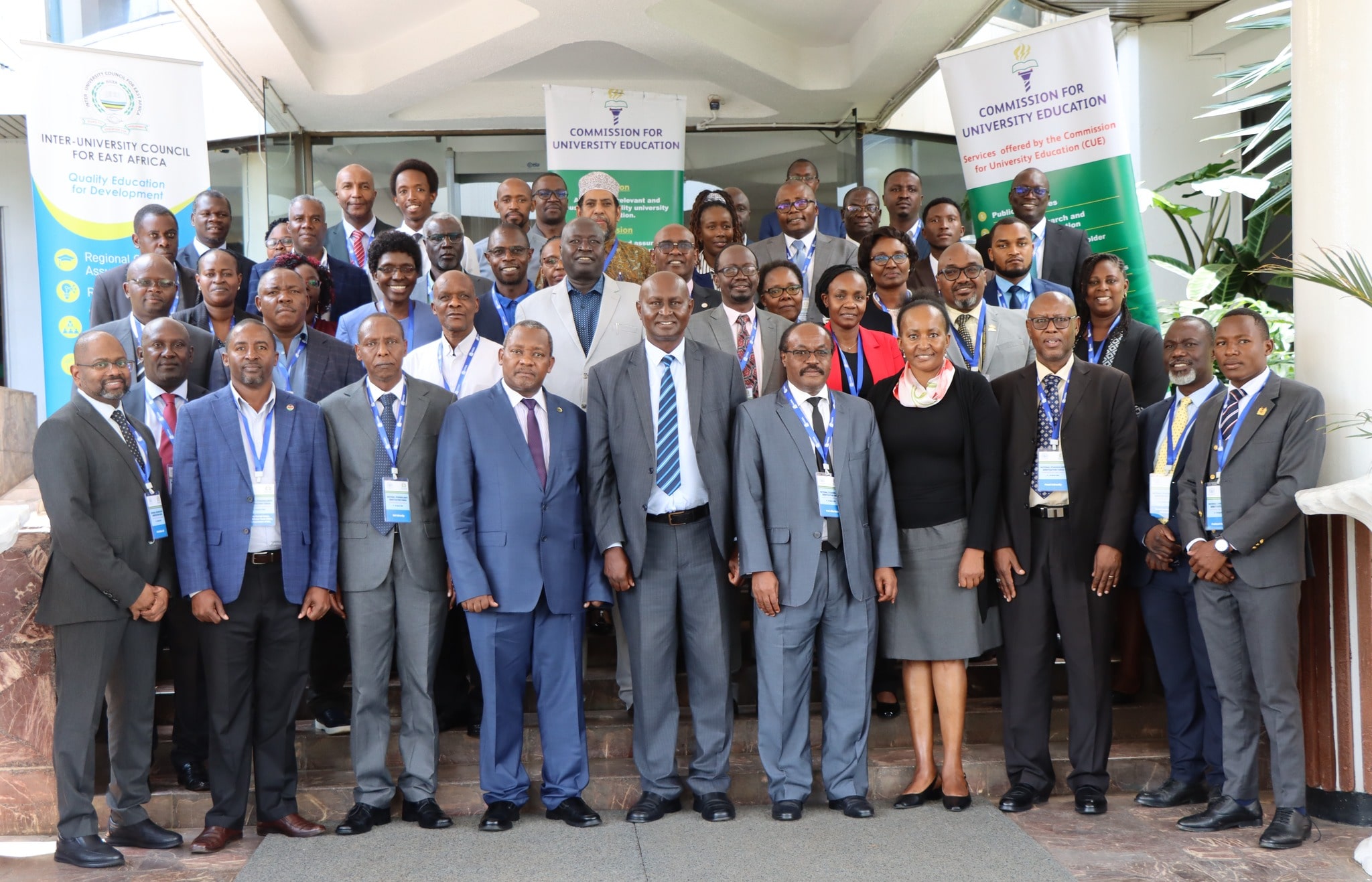
The cost of transporting and maintaining participants in these inter-departmental meetings arranged under this programme is fully borne by the Council. Written reports on such meetings, conferences or workshops must be submitted to the Secretariat soon after each event.


Inter-university games

The inter-university games scheme is intended to foster sports and games on a regional basis and, in that way, provide the students with an opportunity to interact. However, because of the large numbers involved, the Council can only meet a fraction of the total expenses. Request(s) for this support must be submitted to the Executive Secretary through the Office of the Vice-Chancellor of the University where the official making the request works.7. IUCEA Funding There are three main sources for funding the recurrent and developmental budget of the IUCEA: Equal contributions from Member States (Kenya, Tanzania and Uganda); Annual subscription of Member Institutions and Universities; Donors (Development Partners) and other external contributions.


Our Projects
 

The IUCEA is partnering with seven European institutions in a collaborative project aimed at creating, developing and strengthening a social sciences and humanities research network bringing together scholars and institutions from the European research area with colleagues and partner institutions from a number of eastern African countries. Read on

 --------------------------------------

The Lake Victoria Research Initiative (VicRes) is a regional research initiative that offers research grants in various disciplines related to promotion of poverty eradication and sustainable livelihood and natural resources management within the Lake Victoria Basin.Read on ...

 --------------------------------------

The East African Regional Programme and Research Network for Biotechnology, Biosafety and Biotechnology Policy Development (BIO-EARN) aims at meeting the challenges of wider biotechnology, and realizing the potential of the associated techniques under local conditions in Eastern Africa. Read On ...


A
Structure & Organisation I Research & Publications I Important Documents I Newsletter I Scholarships
Privacy Policy I Terms of use I © 1995 - 2010 | iucea.org
Visits: Hit Counter